
Bipotentiostats & RRDE Systems
Bipotentiostats and rotating disk/ring-disk systems support electrochemical experiments requiring either two independently controlled working electrodes or well-defined hydrodynamic mass transport. This subcategory brings together dual-channel potentiostats, dedicated RDE/RRDE rotators and multifunction rotating-electrode platforms for electrocatalysis, reaction-mechanism studies, hydrogen diffusion, corrosion and sensor research.
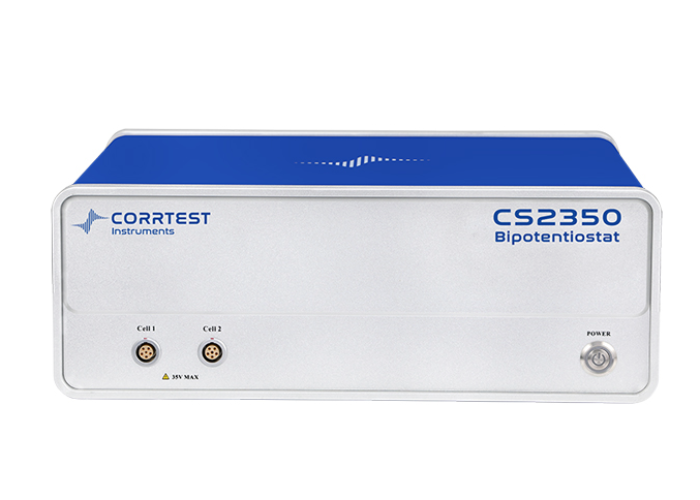
CS2350M Bipotentiostat (2-channel, with EIS)
- Potential Range: ±10 V (customizable to ±12 V)
- Current Range: ±1 A
- EIS Frequency Range: 10 µHz to 1 MHz
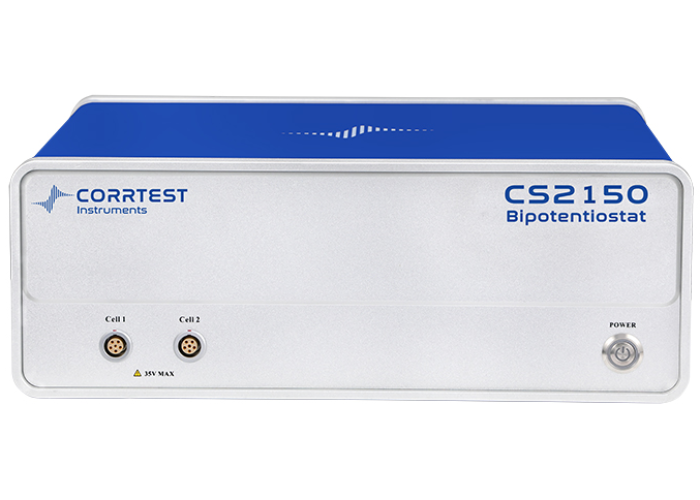
CS2150M Bipotentiostat (2-channel, No EIS)
- Support 2-, 3- or 4-electrode system: Interface: Ethernet
- Potential control range: Primary Channel: ±10V second Channel: ±10V: Current control range: ±1A for each channel

Multi-Function RRDE system
- Rotation Speed: 50–9800 rpm (closed-loop control, <0.1% deviation)
- Speed Control: Manual or via potentiostat (remote control)
- Spin Coating: Supported (with integrated spin functionality)
- Motor Type: High-precision DC servo motor (Japan import)
- Electrode Shaft: Adjustable (vertical/horizontal/inverted)

Admiral Instruments ECR-6100 Complete RDE/RRDE Package
Overview
Bipotentiostats and rotating-electrode systems address two connected parts of an advanced electrochemical experiment: electrical control and controlled mass transport.
A bipotentiostat independently controls two working electrodes. In a rotating ring-disk electrode (RRDE) experiment, the central disk and surrounding ring are separate working electrodes that share one reference electrode and one counter electrode. The disk drives the primary reaction, while the ring detects selected products or intermediates transported from the disk.
A rotating disk electrode (RDE) uses only the central disk. Rotation creates a reproducible hydrodynamic flow and controlled diffusion layer, allowing reaction kinetics and mass-transfer behaviour to be assessed at different rotational speeds. RRDE adds product collection and detection at the ring, providing further information about reaction pathways, selectivity and intermediate stability.
This subcategory therefore includes both:
- Dual-channel electrochemical instruments used to control two working electrodes
- Complete or configurable rotating-electrode platforms containing the rotator, controller, electrode and cell hardware
Standalone replacement and selectable rotating electrodes are available separately through the ScienceGears RDE/RRDE Electrodes range:
https://www.sciencegears.com.au/rde-rrde-electrodes
Key Capabilities
- Independent control and current measurement at two working electrodes
- Controlled RDE and RRDE rotation for reproducible mass transport
- Coordinated disk scanning and fixed-potential ring detection
- Collection-efficiency and reaction-pathway studies
- Levich and Koutecky–Levich analysis under suitable conditions
- Oxygen reduction reaction and hydrogen peroxide selectivity measurements
- Hydrogen diffusion and dual-cell measurements with suitable bipotentiostats
- Manual or externally programmed rotation control, depending on the selected system
- Electrochemical impedance spectroscopy on models equipped with EIS
- Integration with compatible electrochemical cells, electrodes and accessories
Typical Applications
- Oxygen reduction reaction and fuel-cell catalyst studies
- Hydrogen peroxide detection and selectivity analysis
- Electrocatalyst screening for ORR, OER, HER and related reactions
- Detection of electrochemical products and short-lived intermediates
- Redox kinetics, diffusion and controlled mass-transfer measurements
- Hydrogen diffusion and permeation testing
- Corrosion and inhibitor research under controlled convection
- Sensor development and dual-working-electrode measurements
Integration and Compatibility
A complete RDE or RRDE measurement requires the electrochemical electronics, rotator, controller, compatible electrode shaft, cell, counter electrode, reference electrode and connecting leads. The selected components must be mechanically and electrically compatible.
Before ordering, confirm:
- RDE or RRDE measurement mode
- Number and independence of potentiostat channels
- Potential and current ranges
- Whether EIS is required
- Electrical isolation and grounding requirements
- Rotation-speed range and control method
- Electrode material and geometry
- Cell volume, sealing, gas purging and temperature control
- Cable and connector requirements
- Software synchronisation and data-acquisition needs
For RRDE measurements using two separate instruments, the grounding arrangement is particularly important because the instruments share the same electrochemical cell. Follow the selected manufacturer’s floating and grounding instructions before beginning an experiment.
Why Choose ScienceGears?
ScienceGears can help define whether a project requires a bipotentiostat only, a rotating-electrode platform only, or a fully configured combination of electronics, rotator, electrode and cell. Support is available for system comparison, configuration review, quotations, connection planning, commissioning guidance and technical discussion across Australia and New Zealand.
AVAILABLE PRODUCTS
CS2350M Bipotentiostat (2-channel, with EIS)
https://www.sciencegears.com.au/cs2350m-bipotentiostat-2-channel-with-eis
A dual-channel potentiostat with independent control and electrochemical impedance spectroscopy on both channels. It is suited to RRDE, hydrogen diffusion and other coordinated or independent two-channel experiments where impedance measurements are also required.
CS2150M Bipotentiostat (2-channel, No EIS)
https://www.sciencegears.com.au/cs2150m-bipotentiostat-2-channel-no-eis
A two-channel potentiostat for RRDE, hydrogen diffusion and independent electrochemical testing where EIS is not required. It provides a dedicated route for laboratories that need two independently controlled channels without purchasing impedance capability.
Multi-Function RRDE system
https://www.sciencegears.com.au/multi-function-rrde-system
A multifunction rotating-electrode platform supporting RDE, RRDE, spin coating and voltage- or current-assisted deposition workflows. It is suitable when one system is required for both hydrodynamic electrochemistry and electrode-film preparation or modification.
Admiral Instruments ECR-6100 Complete RDE/RRDE Package
https://www.sciencegears.com.au/admiral-instruments-ecr-6100-complete-rderrde-package
A configurable rotating-electrode package combining an 80–8000 rpm angle-adjustable rotator, controller, selected RDE or RRDE electrode and 100 mL cell kit. Potentiostat channels, reference and counter electrodes, leads and temperature-control options can be defined for the intended experiment.
HOW TO CHOOSE
Choose first between electrochemical control and rotating-electrode hardware. A laboratory that already owns a compatible rotator but requires two independent working-electrode channels may need only a bipotentiostat. Select the CS2150M when RRDE or dual-channel operation is required without EIS, or the CS2350M when impedance measurements are also needed on both channels.
Choose the Admiral ECR-6100 package when the main requirement is a dedicated, configurable RDE/RRDE rotator, controller, electrode and cell platform. Add one suitable potentiostat channel for RDE or two independently controlled channels for RRDE.
Choose the Multi-Function RRDE system when RDE and RRDE measurements must be combined with spin coating or voltage/current-assisted film preparation.
In every case, confirm the rotation range, electrode geometry, cell format, electrical isolation, current and potential requirements, software workflow and accessories before ordering.
FREQUENTLY ASKED QUESTIONS
What is a bipotentiostat?
A bipotentiostat independently controls and measures two working electrodes. In an RRDE experiment, one channel controls the disk while the second controls the ring. Both working electrodes normally share one counter electrode and one reference electrode, allowing the ring to detect products or intermediates generated at the disk.
How does an RDE differ from an RRDE?
An RDE contains one rotating disk working electrode and is commonly used to study reaction kinetics and controlled mass transport. An RRDE adds a concentric ring electrode that is controlled independently, enabling selected products or intermediates leaving the disk to be collected and detected.
Does a complete RRDE system automatically include a potentiostat?
Not always. Some products are rotating-electrode hardware packages, while others are bipotentiostat electronics. A measurement-ready configuration may require both. Always confirm whether the quotation includes the rotator, controller, RRDE shaft, cell, reference electrode, counter electrode, leads and two-channel electrochemical control.
Is EIS required for an RRDE experiment?
Electrochemical impedance spectroscopy is not required for a conventional RRDE experiment using techniques such as linear sweep voltammetry, cyclic voltammetry and chronoamperometry. An EIS-capable bipotentiostat is useful when impedance measurements are also part of the broader research programme.
How should the disk and ring materials be selected?
Material selection depends on the electrolyte, potential range, catalyst, background electrochemistry and target detection reaction. Glassy carbon is often used as a catalyst-support disk, while gold and platinum provide different surface and catalytic behaviour. The ring material must support selective detection of the species of interest.
Why are electrical isolation and grounding important?
RRDE places two independently controlled working electrodes in the same cell. Incorrect grounding can create an unintended current pathway and disturb potential measurements. Verify whether the selected channels must be floated and follow the instrument manufacturer’s cable and grounding instructions.
What additional accessories may be required?
Depending on the system, the laboratory may need a compatible reference electrode, counter electrode, cell, gas-purge tubing, polishing kit, temperature-control equipment, connecting leads and suitable potentiostat channels. Confirm electrode dimensions, connectors, chemical compatibility and expected current before ordering.
How does ScienceGears support RDE and RRDE users?
ScienceGears can compare the available electronics and rotating-electrode platforms, identify the required electrodes and cell components, review compatibility, and assist with quotation and commissioning planning for universities, research organisations and industrial laboratories in Australia and New Zealand.
CLOSING SUMMARY
Bipotentiostats and RDE/RRDE systems combine independent electrochemical control with reproducible hydrodynamic mass transport. The correct solution may be an instrument-only bipotentiostat, a dedicated rotating-electrode package or a multifunction platform. ScienceGears can help match the electronics, rotator, electrodes, cell and accessories to the intended method and laboratory workflow.